
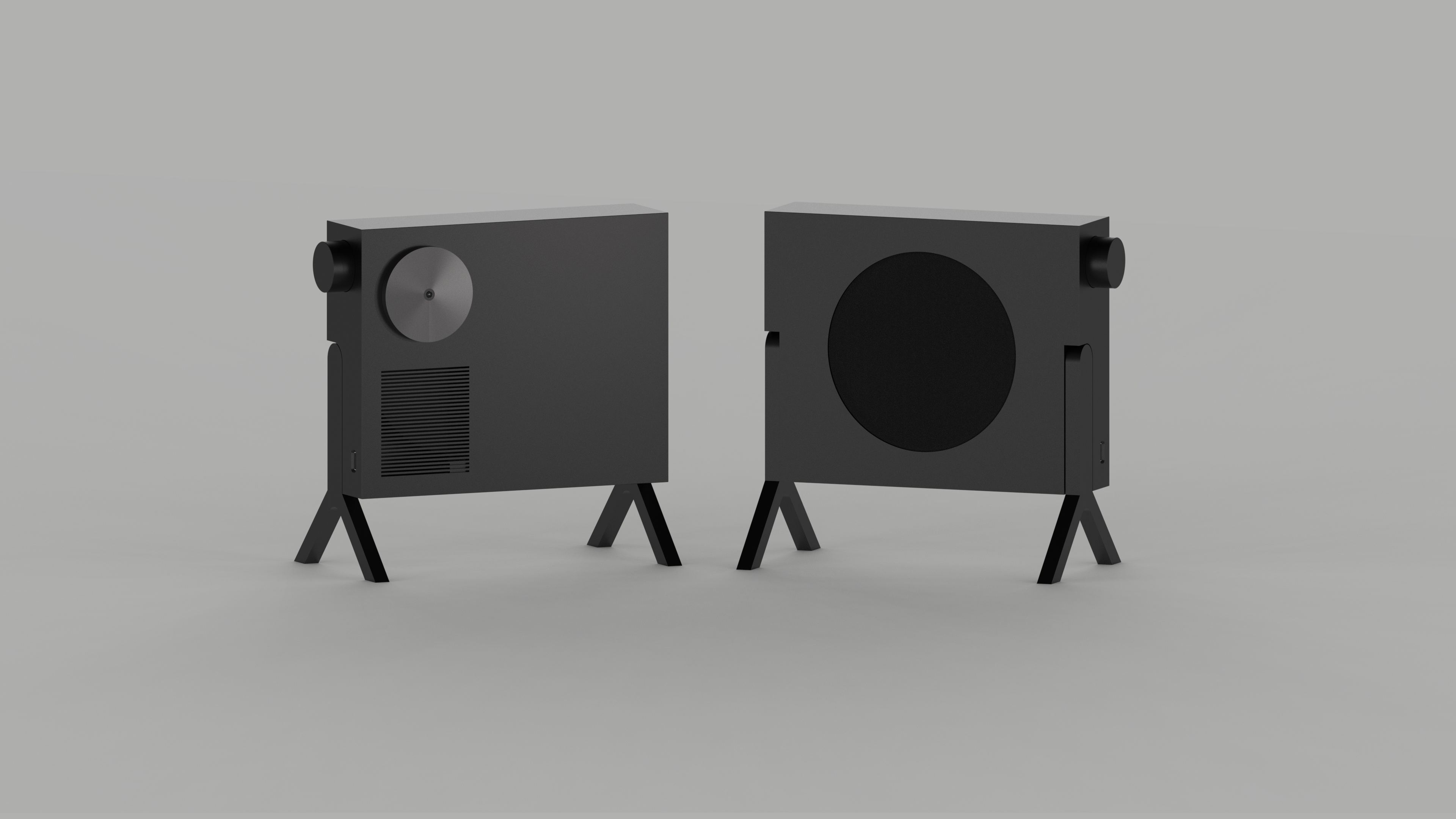
Turns what it sees outside your window into sound.
There is a particular kind of Singapore afternoon where the trees outside the window are completely still, and the room is completely loud. The air conditioner. The construction three blocks away. The traffic on the expressway. The fan in the ceiling.
The view is green. But, the sound is grey.
You can see the nature. You cannot hear it.
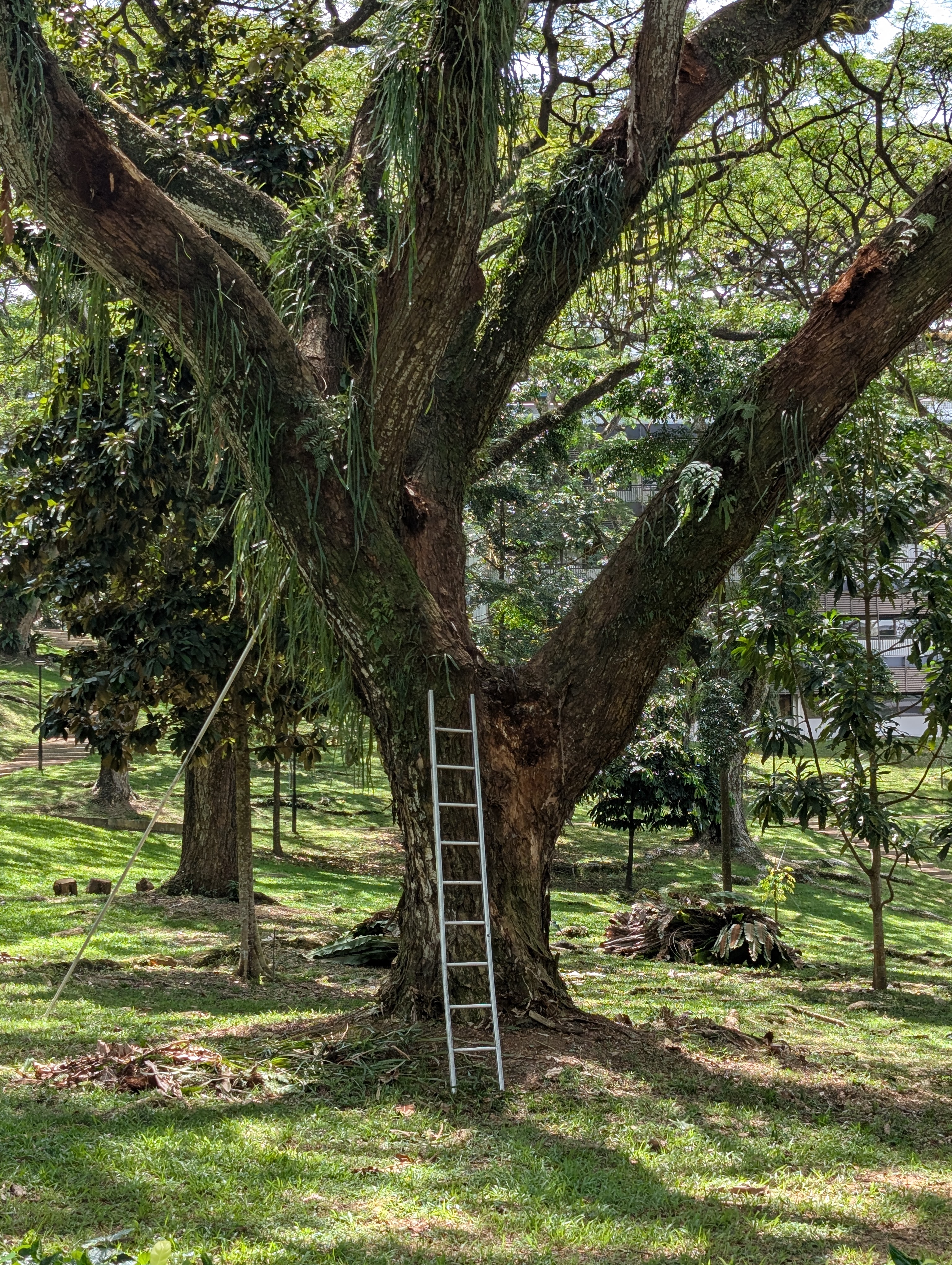
The city has spent decades planting itself into a forest. The trees are real. The parks are real. The biodiversity is real. But the acoustic environment that should come with all of that has been buried under the sound of the city that built it.
R. Murray Schafer called this a lo-fi soundscape. Continuous broadband noise that masks every individual sound underneath it. You can be standing next to a tree full of birds in Singapore and not hear a single one of them, without the drone of the city.
The deficit is not visual. It is acoustic. And the restorative qualities of nature, the ones that calm the nervous system and pull attention back from the screen, depend significantly on the part that has been drowned out.
"What if music came from the room, not a recording?"
A device that watches its environment, like how we look outside of a window, and turns what it sees into live reactive sound.
The work began as an investigation. Six experimental translations were built, each turning a single property of a scene into sound. Colour became tone. Motion became rhythm. Brightness became pitch. Each one worked, and each one was partial.
The instrument that followed merged them into two layers. One reads the whole frame and shapes the rhythm and mood underneath everything. The other tracks individual regions of motion, giving each its own voice, pitched by the colour it was born from.
The instruments themselves were fixed by hand. Bass holds the background, marimba sits in the foreground. The environment controls the pitch, the timing, the intensity. But the timbre was chosen so the sound never competes with the room. The ceiling on how aggressive it can become was set before the environment was given the keys.
Every note comes from a pentatonic scale, so any combination the environment produces stays consonant. The randomness lives inside an envelope of intentionality.
.gif)
.gif)
.gif)
.gif)
.gif)
Constrain the rules. Free the input. That is the whole instrument.
A translation that sounds right through headphones does not automatically sound right in a space. Once the system worked as software, the question changed. How should it actually reach a person sitting in a room?
.jpg)
.jpg)
.jpg)
.jpg)
So I got to building.
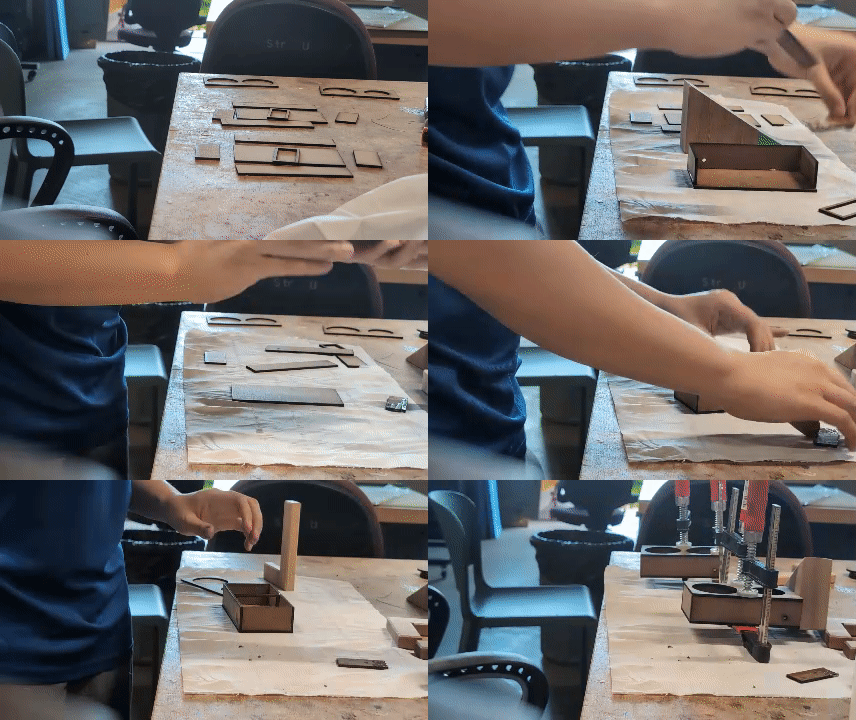
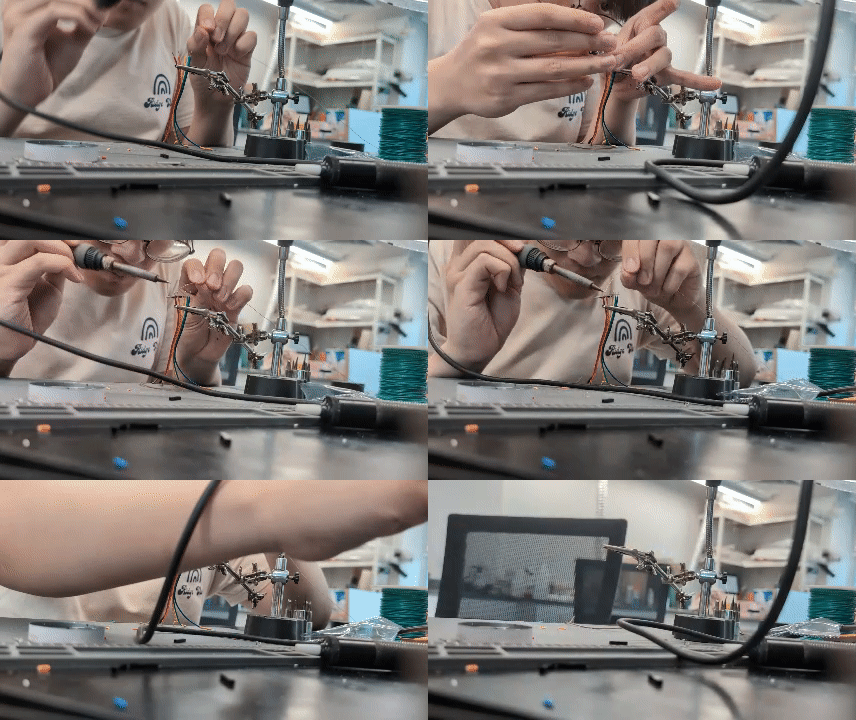
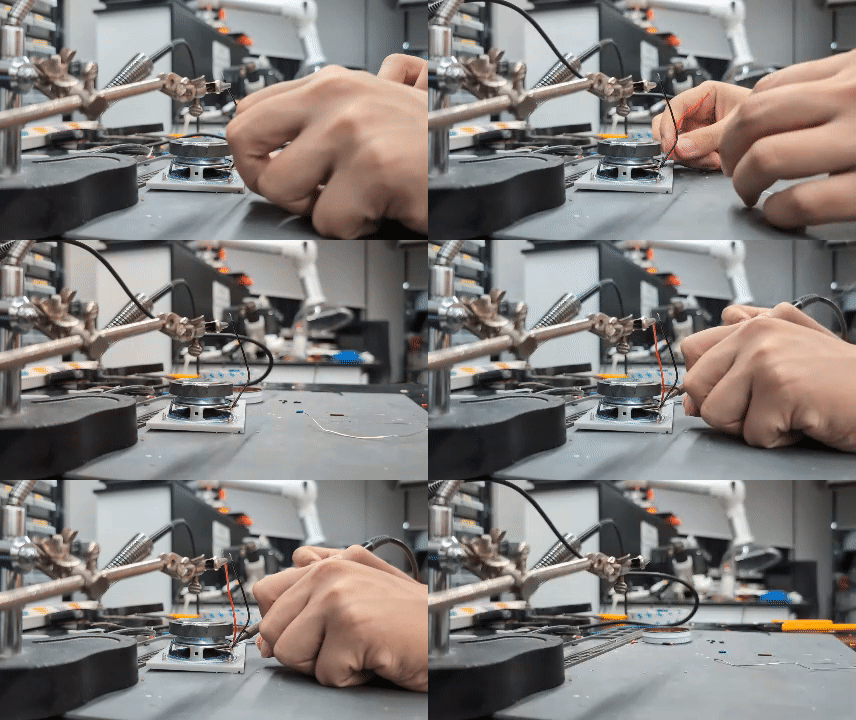
I prototyped enclosures in MDF and 3D print, and damped them internally with felt and pillow stuffing. I tested drivers from 2.5 inch up to 6 inch. The device had to stay small, so a ported enclosure was out — there was no room for the tuning. I used passive radiators instead, which kept real bass in a body small enough to sit on a windowsill.
The combination that won was a 2.5 inch driver in an MDF enclosure. The larger drivers gave more output than the device needed and pushed the sound forward into the room. MDF was inert where the 3D print resonated. The smallest driver, in the most neutral box, produced the most honest version of the soundscape — present, warm, and content to stay in the background.
.jpg)
.jpg)
.jpg)
.jpg)
.jpg)
.jpg)
.jpg)
.jpg)
.jpg)
.jpg)
.jpg)
The point of these tests was the same as the point of the bass and marimba. The physical form is another filter sitting between the environment and the listener, and it had to be chosen so the sound stayed in the background where it belonged rather than pushing itself forward into the room.
The enclosure is part of the instrument. The body shapes the voice.
The device was placed in real environments and people were asked to sit with it. They almost always reached for it first. They saw the camera and wanted to wave at it, cover it, see what it would do. After a minute they stopped. They settled. They stood there and they listened, and they looked out at whatever the device was looking at.
Two of them, in separate sessions, said the same thing without being prompted. The sound made them feel more connected to the environment around them.
.jpg)
.jpg)
.jpg)
.jpg)
.jpg)
That was the moment the project stopped being a translation system and became a device.
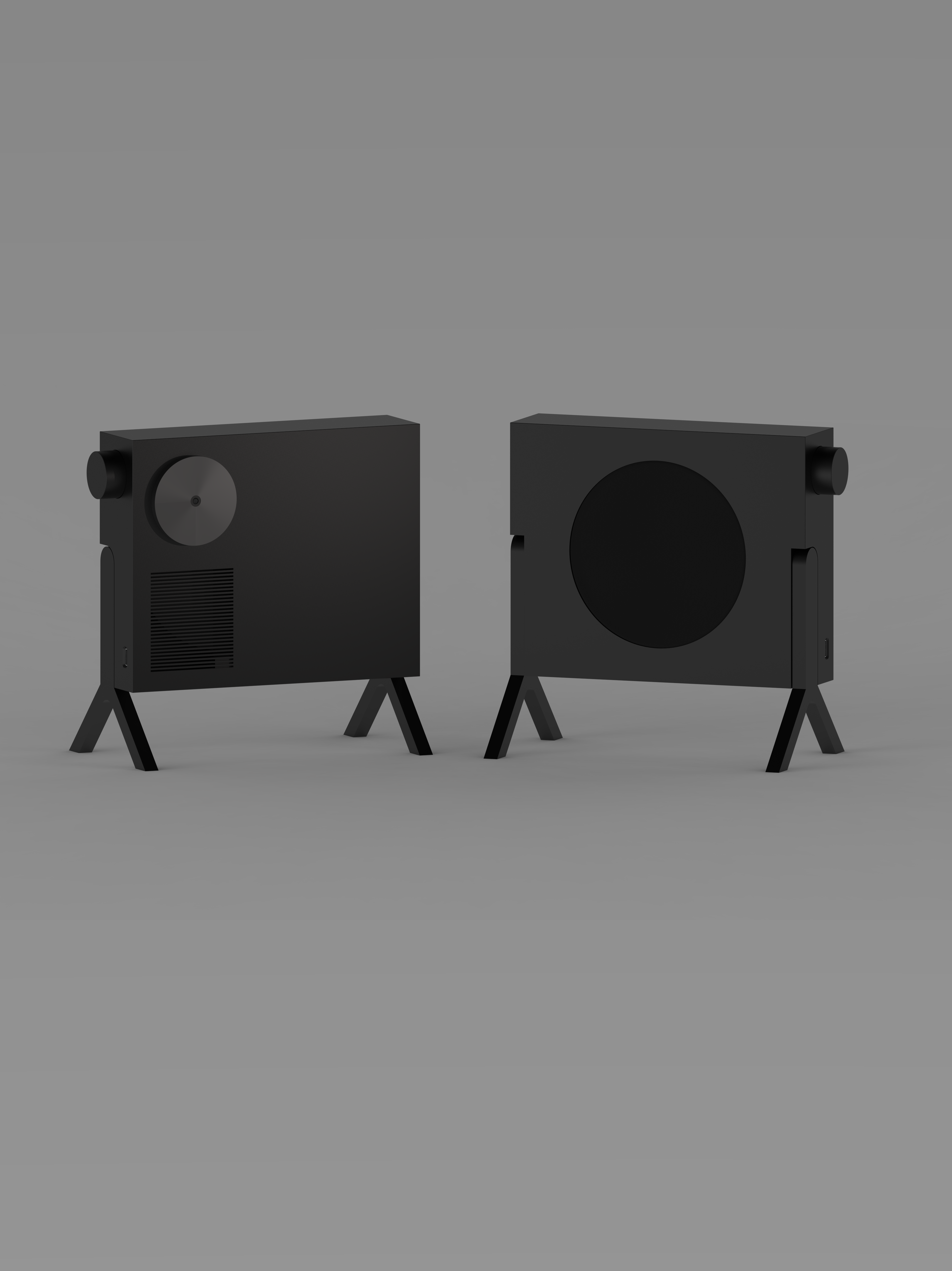
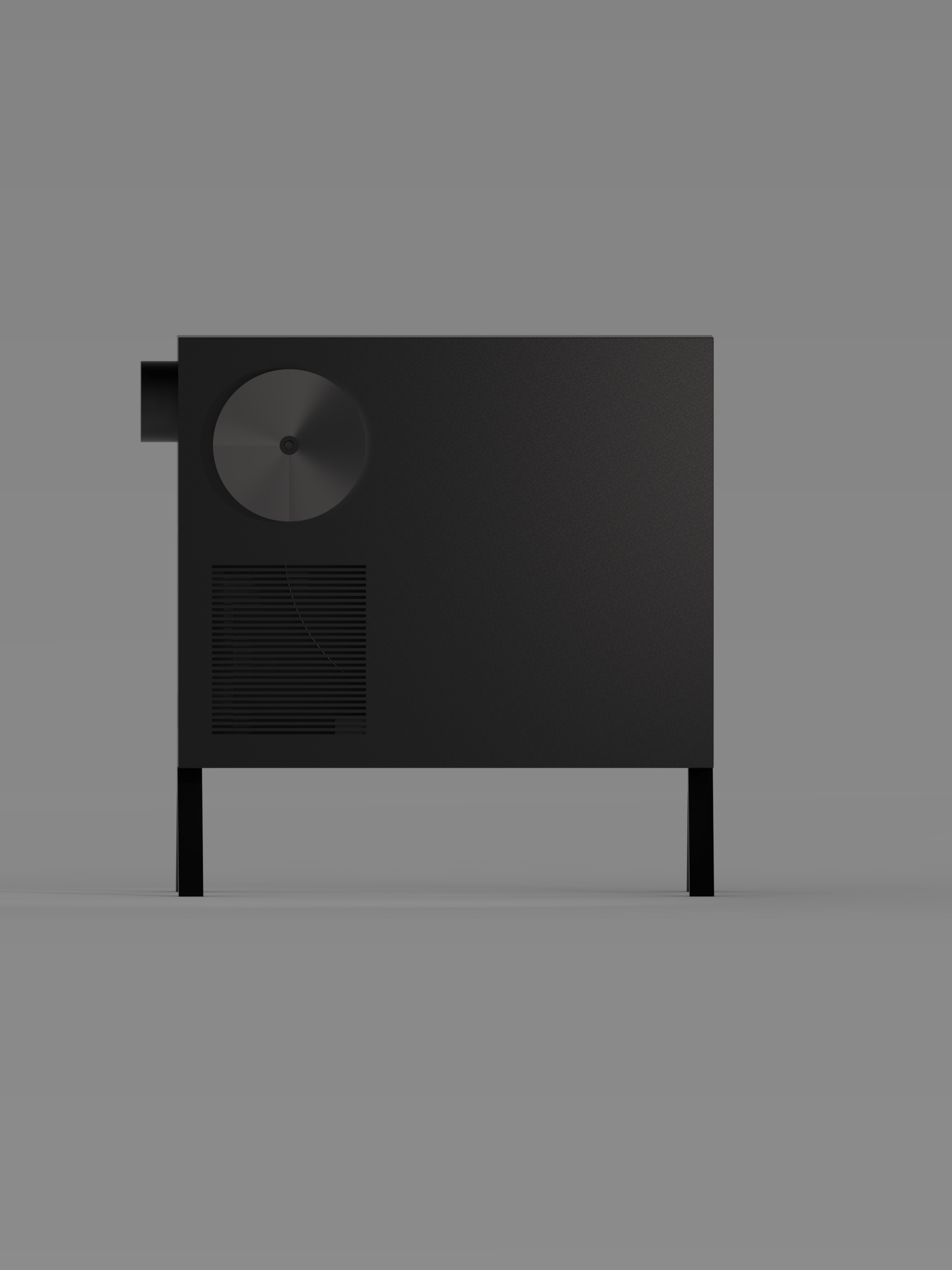
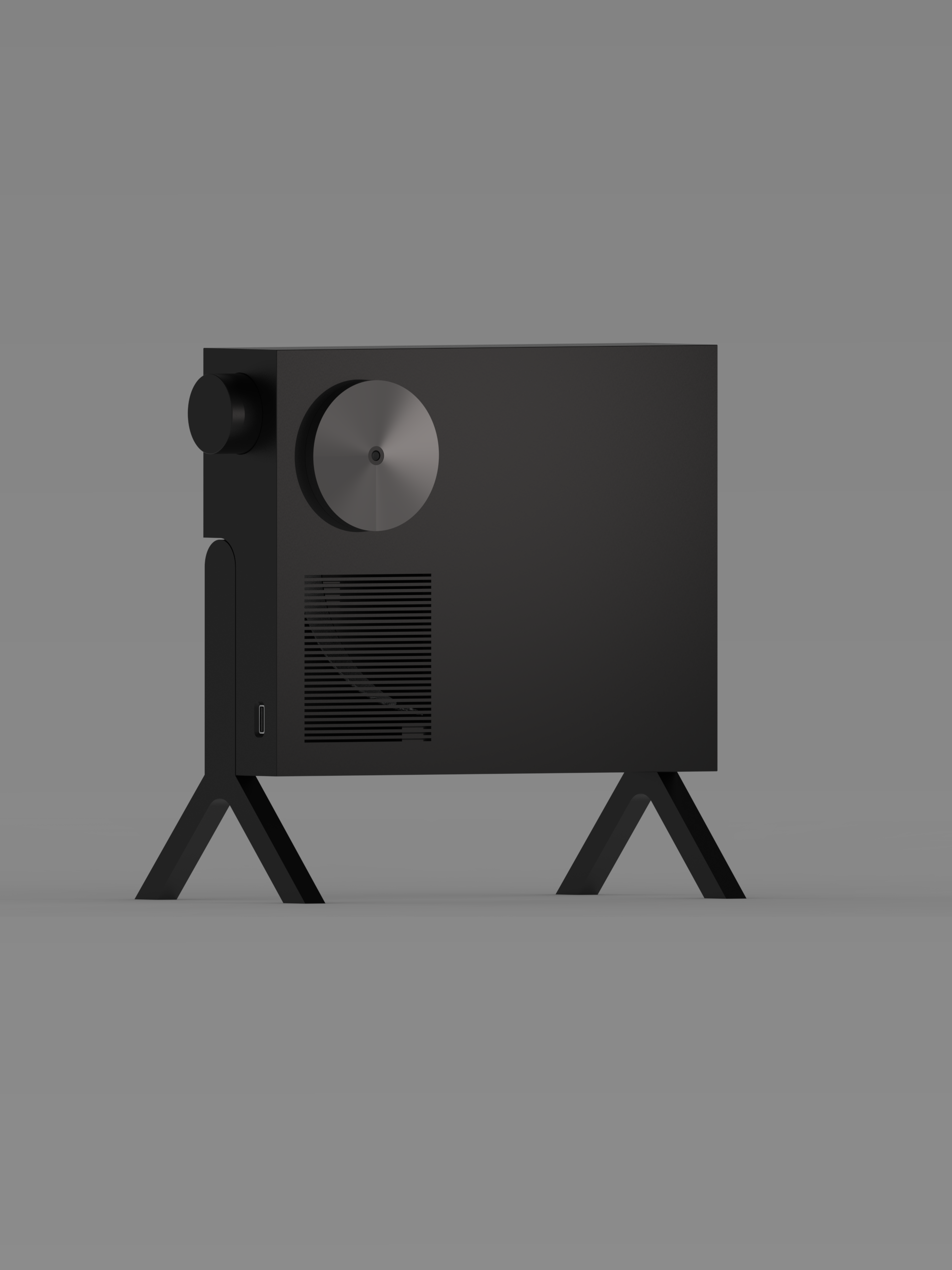
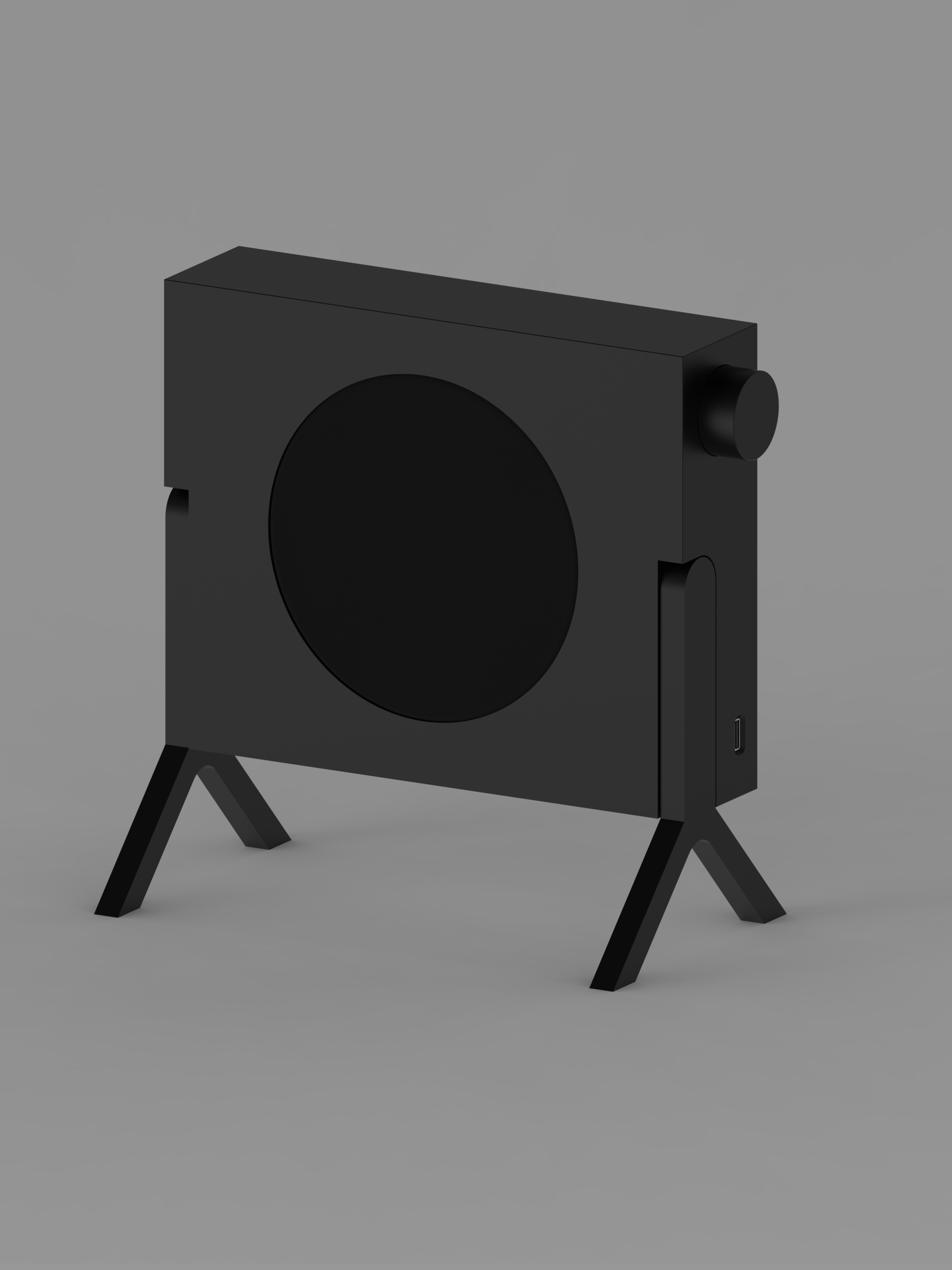
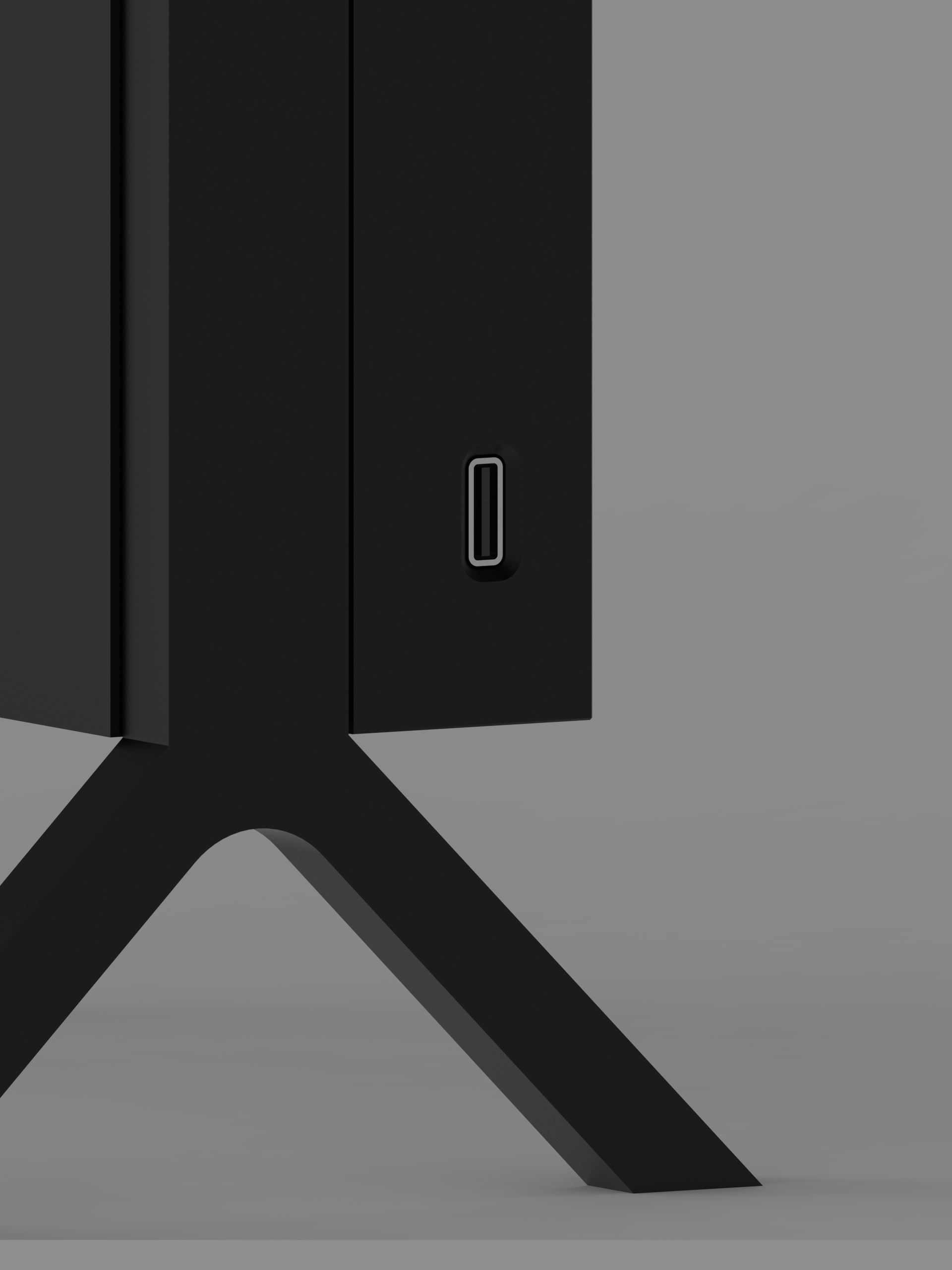
Blackbird is a small device that sits on a windowsill. It has a camera, a speaker, and a single board computer inside it. The translation system that runs on it is called CAW — Contextual Audio World. The signal chain runs locally. Nothing is sent to the cloud. Nothing is pre-recorded. Nothing repeats.
The form is quiet on purpose. It is not a sculpture. It is not a feature. It is meant to disappear into the room it is in, the way a windchime does, and only become visible when you notice that the music in the room is the same music as the movement outside the glass.
.gif)
.gif)
The user tests pointed somewhere the work was not originally designed for. The device works in a home or an office, but the place it seems to matter most is the place where someone is stuck. A breakroom. A waiting room. A hospital ward. A care facility. Somewhere a person did not choose to be, and somewhere they may not be able to leave.
The sound does not replace the outside. It carries a signature of it. Enough to invite a pause. Enough to make the space feel connected to something larger than the four walls of the room.
It is like a windchime, but it is much more than that.
Leon Pereira
Donn Koh
Division of Industrial Design
NUS
2026